
ResearchCross-Asset Allocation
Risk Budgets Reveal What Dollar Weights Hide
Equal allocations can make very unequal contributions to a portfolio’s uncertainty.


Independent investor education
Free, independent research that connects global markets to the real economy, with public sources and clearly separated facts, opinions and scenarios.
Why this exists
World Markets Institute develops educational research about the forces that shape markets and investment decisions.
Six research topics

Featured topic · 01
How growth, inflation, interest rates, fiscal policy, and central bank decisions across major economies interact, and what those forces can mean for markets. Coverage focuses on public data releases and policy statements.
Analysis of stock markets by region, sector, and style, including earnings trends, valuation measures, and the drivers behind market leadership. Written to explain frameworks, not to recommend individual securities.
Government and corporate bond markets, yield curves, credit spreads, duration, and inflation-linked debt. Explains how rate expectations and credit conditions shape returns and risk for bond investors.
Where capital is moving across mutual funds, ETFs, regions, and asset classes, based on publicly reported flow data. Examines what flows can and cannot tell us about investor positioning.
Surveys, volatility measures, positioning indicators, and other gauges of investor mood. Discusses how sentiment has historically related to market behavior, and the limits of using it as a signal.
How stocks, bonds, cash, commodities, and real assets fit together in diversified portfolios. Explores correlations, risk budgeting, and scenario thinking at a general, educational level.
Our research approach
No single indicator explains markets. We look through five complementary lenses and say plainly what each one cannot tell us.
Latest research
ResearchCross-Asset Allocation
Equal allocations can make very unequal contributions to a portfolio’s uncertainty.
ResearchMarket Sentiment
A useful sentiment checklist organizes evidence without forcing it into a bullish or bearish verdict. It keeps measures, horizons, populations, and uncertainty distinct, then specifies when the available information is insufficient for the proposed conclusion.
ResearchCross-Asset Allocation
A policy written during a calm meeting can answer questions that become much harder when prices fall.
ResearchEquity Strategy
The purpose of research is to reach a defensible decision with visible assumptions. That decision can be to continue investigating, to reject an idea, to watch for a different price, or to construct a paper position under defined conditions. Completing a spreadsheet does not create an obligation to buy.
ResearchGlobal Macro
A missing year-earlier index prevents the usual annual calculation but does not erase all current information. Reading the available observations, comparison windows, and estimation limits carefully avoids turning an incomplete dataset into a falsely precise inflation story.
Learning perspectives
 Fixed Income
Rates are the price of time. They influence borrowing, company valuations and the appeal of cash versus risk.
Explore Fixed Income Fund Flows
Flows record where money went. Reading them well means knowing their gaps, lags and double counting.
Explore Fund Flows Market Sentiment
Mood matters most at extremes. Context helps separate a useful warning from noise.
Explore Market Sentiment Cross-Asset Allocation
Owning different assets is about how a portfolio behaves when you are wrong, not about maximizing any single outcome.
Explore Cross-Asset AllocationGlobal MacroEnergy, food, transport and trade are where growth and inflation begin, long before they appear in prices.
Explore Global Macro Make your study time count.
OngoingMember program
Earn points as you study. Once you reach the program threshold, you qualify for a prize drawing.

EndedNew York member meeting
At the Harvard Club, 72 members explored what the selloff revealed about chipmakers, consumer staples and clean energy, and which earnings could withstand another setback.
EndedOnline workshop
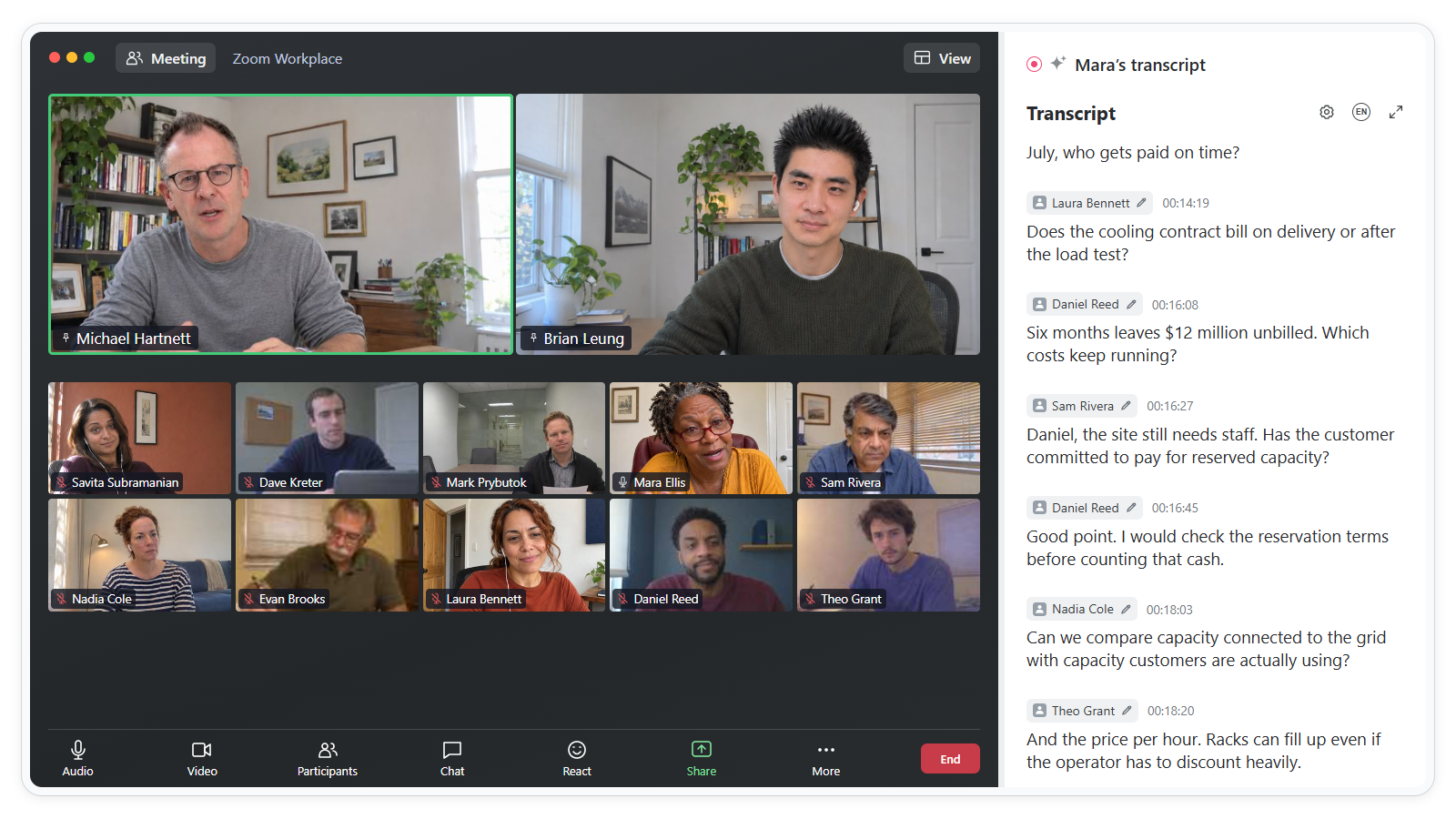
Follow a six-month power delay from chip delivery through equipment acceptance to the first paying cloud customer.
A permanent record
Every published piece stays in the archive with its original date, so readers can see what was known at the time and how views changed.